

Inflation is continuously rising across the globe, and its impact is affecting the lives of ordinary citizens. In light of this, governments periodically take decisions regarding wages and salaries in an effort to provide relief to the public. Recently, the Canadian government made a significant decision to raise the federal minimum wage to $18.15 per hour. This change is set to take effect on April 1st and will directly benefit hundreds of thousands of employees.
While this increase may sound modest—just 40 cents per hour—over the long term, it will bring about a significant improvement in employees’ incomes. For those who are already managing their expenses on a limited income, in particular, this change could prove to be a source of much-needed relief.
Why Was the Minimum Wage Increased?
This wage hike by the government is not the result of a sudden, arbitrary decision; rather, it was implemented through a predetermined process. In Canada, the federal minimum wage is adjusted annually based on the country’s average inflation rate (Consumer Price Index).
In 2025, the inflation rate stood at approximately 2.1%, serving as the basis for this 40-cent wage increase. This new rate was rounded to the nearest 5 cents, resulting in the final figure being set at $18.15 per hour.
The objective of such a system is to ensure that employees’ incomes remain balanced relative to inflation and that their purchasing power does not diminish.
Which Employees Will Benefit?
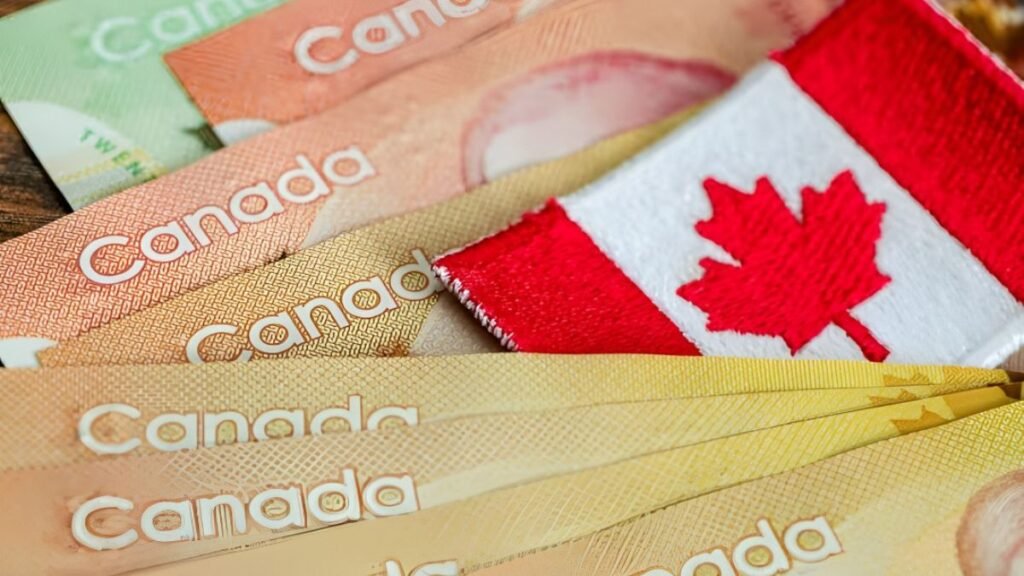
This federal minimum wage does not apply to all employees; rather, it applies exclusively to those working in federally regulated industries. These sectors include transportation, banking, and telecommunications.
Employees working in these specific sectors will directly benefit from this new wage rate. However, the majority of employees in Canada fall under provincial or territorial minimum wage regulations, which are established independently by each respective province or territory.
Varying Wage Rates by Province
In Canada, minimum wage rates vary from one province or territory to another. In some places, this rate is higher than the federal rate, while in others, it is lower.
For instance, the minimum wage in Nunavut is $19.75 per hour—the highest in the entire country. Conversely, in Alberta, the rate stands at $15 per hour, which is considered the lowest.
This implies that many employees are already earning a wage higher than the federal rate; however, in regions where the rate is currently lower, this new increase will bring about a positive change.
When Was the Minimum Wage Introduced?
The federal minimum wage in Canada was introduced in 2021, when the government of the then-prime minister, Justin Trudeau, implemented it.
The objective of this measure was to ensure a uniform minimum wage across the country, particularly in sectors that fall directly under federal jurisdiction. Since its inception, it has been updated annually to keep pace with inflation.
Impact on Employees and the Economy
An increase in the minimum wage is not limited solely to employees; rather, it has repercussions across the entire economy. When people’s incomes rise, their purchasing power increases as well, thereby boosting market demand.
However, some experts argue that this could place increased cost pressures on companies, potentially leading them to raise prices or reduce their workforce. Nevertheless, wage increases implemented in a balanced manner generally prove beneficial for the economy.
Conclusion
Raising the federal minimum wage in Canada to $18.15 per hour is a measure taken directly to improve the standard of living for millions of employees. While this increase may appear modest amidst the current inflationary climate, its long-term impact is expected to be significant.
This decision also demonstrates that governments are now taking proactive steps to ensure that workers’ incomes remain balanced relative to inflation. In the coming years, it will be interesting to observe whether such decisions inspire other nations to follow suit.
FAQs
Q. What is the new federal minimum wage in Canada?
A. It has increased to $18.15 per hour.
Q. When will the new wage come into effect?
A. The new rate will be लागू from April 1.
Q. Why was the minimum wage increased?
A. It was adjusted based on inflation (Consumer Price Index).
Q. Who will benefit from this wage increase?
A. Workers in federally regulated industries like banking, transport, and telecom.
Q. Is this wage the same across all of Canada?
A. No, provinces and territories have their own minimum wage rates.