

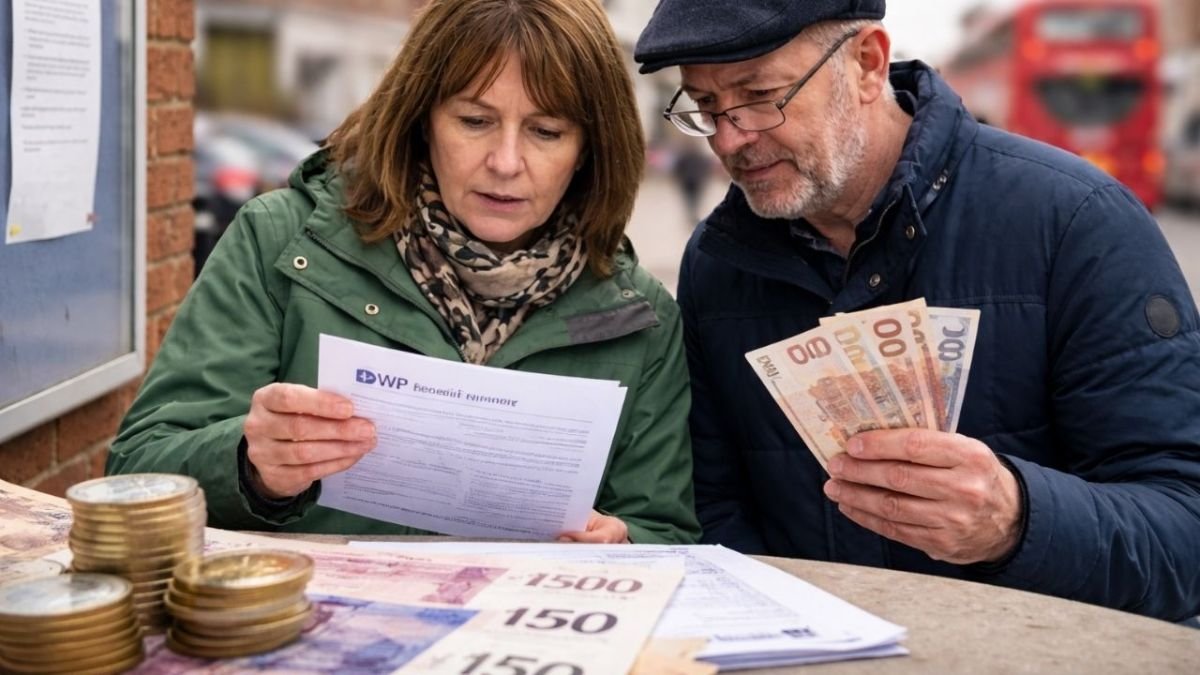
Recently, significant news has emerged regarding the United Kingdom’s social security system, in which the Department for Work and Pensions (DWP) has indicated that, following an increase in the State Pension starting in April 2026, certain categories of beneficiaries could receive an amount of up to approximately £649 per week.
This update is particularly important for those who rely on the state pensionstate pensionstate pension as their primary source of income after retirement. This change has sparked both curiosity and numerous questions among the public regarding who will receive this increase, how it will be distributed, and what the eligibility criteria will be.
What is the State Pension, and why is it important?
The State Pension is a regular pension scheme provided by the United Kingdom government, awarded to citizens who have paid National Insurance contributions during their working lives. This pension provides financial security to individuals after retirement, enabling them to comfortably cover their daily living expenses.

The DWP periodically adjusts the amount of this pension to ensure that individuals receive adequate support in line with inflation and the rising cost of living. It is in this context that discussions regarding a potential increase around April 2026 have come to light.
What does a weekly pension of £649 signify?
However, it is crucial to note that the sum of £649 per week will not be received by every individual; rather, it represents an estimated maximum total pension amount that may be attainable under specific circumstances. Generally, the amount of the state pensionstate pensionstate pension depends on an individual’s National Insurance record, their years of contributions, and other eligibility criteria.

This implies that those who have contributed regularly over a long period and possess the full number of qualifying years may be eligible to receive the maximum pension benefit. Conversely, for those with fewer contributions, their pension amount will be proportionately lower.
Potential Changes from April 2026
According to the changes proposed or indicated by the DWP, the State Pension may undergo an increase in April 2026—an adjustment that is typically determined based on the “Triple Lock” system currently in effect in the UK.
Under this system, pension increases are determined based on the highest of the following three rates:
- Growth in average earnings
- The inflation rate
- Or a fixed minimum percentage
Whichever of these rates is the highest serves as the basis for the pension increase. Consequently, significant increases in pensions are observed from time to time.
Who will benefit from this increase?

This increase will primarily benefit individuals who:
- Are eligible for the UK State Pension
- Have made sufficient National Insurance contributions
- And have reached the retirement age (state pensionstate pensionstate pension age)
Furthermore, under the new regulations, some individuals may also be eligible for a partial pension if they have not completed the full number of qualifying years.
Will everyone receive £649 per week?
No; this can be a common misconception. £649 per week is not a fixed, universal sum that every pensioner will receive. It may represent an estimate of the maximum or combined benefits, which could include:

- The Basic State Pension
- The Additional State Pension (if applicable)
- And other related benefits
- The actual amount received will vary from person to person.
The impact of this change on the general public
If pension increases reach this level, retired individuals will be the direct beneficiaries. This will boost their purchasing power, enabling them to better manage their daily expenses despite rising inflation.
Additionally, this change will bring relief to those who rely entirely on their savings and pension income. However, it remains crucial for individuals to strengthen their retirement planning in advance rather than relying solely on the state pension.state pension.state pension.
How to apply and obtain information?
To access information regarding the State Pension, individuals can visit the official DWP website or utilize relevant government portals.
On these platforms, users can:
- Check their pension forecast.forecast.forecast.
- View their National Insurance record
- And understand the application process
Furthermore, if anyone has doubts regarding their eligibility or payment status, they can contact the DWP directly or seek assistance from their local pension office.
Conclusion
The potential increase in the state pensionstate pensionstate pensionstate pension in April 2026 is regarded as a significant step that will help strengthen the financial position of retirees. Although the figure of £649 per week will not apply equally to everyone, it signals an ongoing effort to make the pension system more robust and better aligned with inflation in the future.
If you are currently a beneficiary of the State Pension—or are set to become one—now is the ideal time to gain a thorough understanding of your National Insurance contributions and retirement planning, ensuring that you can maximize your benefits in the future.
FAQs
Q1. Is £649 per week guaranteed for all pensioners?
A. No, the Department for Work and Pensions (DWP) does not confirm a fixed £649 for everyone. It depends on individual eligibility and contributions.
Q2. Who can receive the increased State Pension?
A. UK residents who meet State Pension age and have sufficient National Insurance contributions.
Q3. What affects the pension amount?
A. Your National Insurance record, qualifying years, and type of pension determine the final amount.