

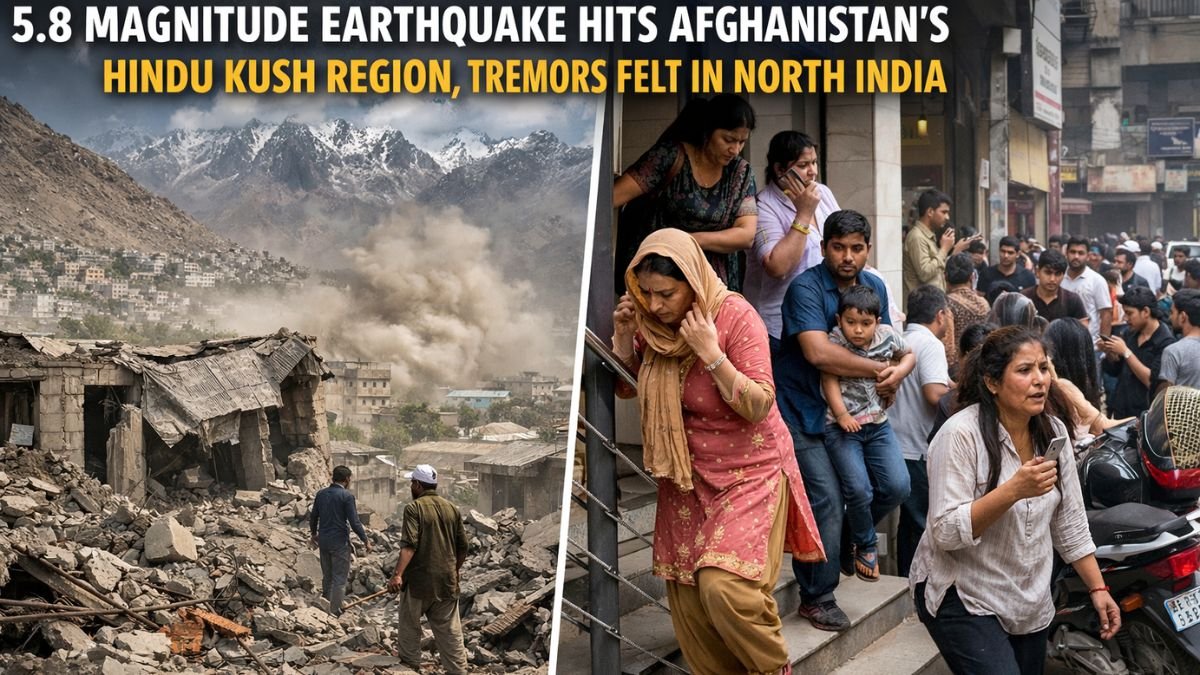
A 5.8 magnitude earthquake struck the rugged Hindu Kush region of Afghanistan, sending shockwaves across borders and triggering tremors that were felt in several parts of North India. The sudden jolt caused widespread concern among residents, many of whom rushed out of their homes and offices as buildings trembled for a few seconds. Although such seismic events are not uncommon in this geologically active region, each occurrence brings with it a renewed sense of vulnerability and awareness about the power of nature.
The earthquake serves as yet another reminder of the dynamic and often unpredictable forces beneath the Earth’s surface. While initial reports suggest no catastrophic damage, the psychological impact and precautionary measures taken by people highlight the seriousness with which such events are perceived.
The Epicenter in Afghanistan’s Hindu Kush Region
The epicenter of the earthquake was located in the mountainous Hindu Kush region, a zone well-known for its frequent seismic activity. This area lies along a complex tectonic boundary where the Indian Plate collides with the Eurasian Plate, resulting in continuous geological stress and occasional releases of energy in the form of earthquakes.
The Hindu Kush has historically recorded numerous moderate to strong earthquakes, many of which have had far-reaching effects beyond Afghanistan’s borders. Due to the depth and intensity of seismic waves generated in this region, tremors are often felt in neighboring countries such as Pakistan, India, and even parts of Central Asia.
This particular earthquake, measured at 5.8 on the Richter scale, falls into the category of moderate quakes. However, the depth at which it occurred and the geological composition of the region contributed to the tremors being felt across a wide geographical area.
Tremors Felt Across North India
In India, several northern states experienced noticeable tremors, including Delhi, Punjab, Haryana, and parts of Uttar Pradesh. Residents reported feeling sudden vibrations, swaying ceiling fans, and slight movement of furniture. In high-rise buildings, the tremors felt more pronounced, leading to brief moments of panic among occupants.
Many people instinctively moved outdoors to open spaces, following standard safety practices during earthquakes. Offices paused operations, and schools ensured that students were moved to safer areas until the tremors subsided. Although the shaking lasted only a short duration, it was enough to remind people of the region’s seismic sensitivity.
Authorities in India quickly reassured the public that there was no immediate threat of aftershocks causing significant damage. Emergency services remained on alert, monitoring the situation and ensuring that any potential issues were addressed promptly.
Why the Hindu Kush Region Is Prone to Earthquakes
The frequent occurrence of earthquakes in the Hindu Kush region is primarily due to its unique geological setting. The collision between the Indian and Eurasian tectonic plates creates immense pressure beneath the Earth’s surface. Over time, this pressure builds up until it is released in the form of seismic activity.
Unlike shallow earthquakes, many quakes in the Hindu Kush occur at considerable depths. These deep-focus earthquakes can travel long distances, which explains why tremors are often felt far from the epicenter. The energy released spreads across a wide area, affecting multiple regions simultaneously.
Geologists have long studied this region to better understand its seismic behavior. While advancements in technology have improved monitoring and early detection, predicting the exact timing and intensity of earthquakes remains a challenge.
Public Reaction and Immediate Response
The sudden nature of the earthquake led to swift reactions from people across affected areas. In cities like Delhi, office workers stepped out of buildings, while residents in apartment complexes gathered in open spaces. Social media platforms quickly filled with posts from individuals sharing their experiences and checking on the safety of friends and family.
Emergency helplines were activated, and local authorities issued advisories urging people to remain calm and avoid spreading misinformation. Hospitals and disaster response teams were put on standby as a precautionary measure, even though no major injuries or damages were reported initially.
Such coordinated responses highlight the increasing awareness and preparedness among both authorities and the public. Over the years, earthquake drills and safety campaigns have played a crucial role in educating people about how to respond during such situations.
Infrastructure and Preparedness in Seismic Zones
The impact of an earthquake often depends on the preparedness of the region it affects. In earthquake-prone areas like North India, building codes and construction standards have been revised over time to ensure greater resilience. Structures are designed to withstand moderate tremors, reducing the risk of collapse and serious damage.
However, older buildings and poorly constructed structures remain vulnerable. This raises concerns about the need for regular inspections and retrofitting to enhance their safety. Urban expansion and population growth further emphasize the importance of adhering to strict construction guidelines.
Governments and disaster management agencies continue to invest in improving infrastructure and response mechanisms. From early warning systems to public awareness campaigns, multiple efforts are underway to minimize the impact of future earthquakes.
The Science Behind Measuring Earthquakes
The magnitude of an earthquake is determined using the Richter scale or more advanced methods like the moment magnitude scale. A 5.8 magnitude earthquake is considered moderate, capable of causing slight to moderate damage depending on factors such as depth, location, and building quality.
Seismographs play a crucial role in detecting and recording seismic activity. These instruments measure the vibrations caused by earthquakes, providing valuable data for analysis. Scientists use this information to understand patterns, assess risks, and improve predictive models.
Despite technological advancements, earthquakes remain one of the most unpredictable natural phenomena. While early warning systems can provide a few seconds of notice in some cases, long-term predictions are still beyond current capabilities.
Regional Impact and Cross-Border Effects
One of the unique aspects of earthquakes in the Hindu Kush region is their ability to affect multiple countries simultaneously. The interconnected nature of tectonic plates means that seismic activity in one area can have repercussions across borders.
In this case, the tremors felt in North India illustrate how geological events do not adhere to political boundaries. This underscores the importance of regional cooperation in disaster management and information sharing.
Countries in the region often collaborate on seismic research, data exchange, and emergency response strategies. Such cooperation is essential for improving preparedness and reducing the impact of future events.
Psychological Impact of Earthquakes
Beyond physical damage, earthquakes also have a significant psychological impact on people. The sudden and uncontrollable nature of these events can lead to fear, anxiety, and a sense of helplessness. Even minor tremors can trigger memories of past disasters, especially in regions that have experienced severe earthquakes before.
For many individuals, the experience of feeling the ground shake is deeply unsettling. It disrupts the sense of stability and security that people associate with their surroundings. This is why public awareness and mental health support are important aspects of disaster management.
Encouraging calm behavior, providing accurate information, and offering reassurance can help mitigate the psychological effects of such events.
Lessons and the Way Forward
Each earthquake, regardless of its magnitude, serves as a learning opportunity. It highlights the importance of preparedness, infrastructure resilience, and public awareness. While it is impossible to prevent earthquakes, their impact can be significantly reduced through proactive measures.
Regular safety drills, adherence to building codes, and investment in disaster management systems are crucial steps in this direction. Individuals also have a role to play by staying informed and following safety guidelines during emergencies.
The recent earthquake in the Hindu Kush region is a reminder that nature’s forces are ever-present. It calls for continued vigilance, cooperation, and commitment to building safer communities.
Conclusion
The 5.8 magnitude earthquake that struck Afghanistan’s Hindu Kush region and sent tremors across North India is a testament to the dynamic nature of our planet. While the immediate impact may have been limited, the event reinforces the need for preparedness and awareness.
From geological insights to public response, every aspect of this घटना provides valuable lessons. It reminds us that while we cannot control natural forces, we can certainly equip ourselves to face them with resilience and readiness.
As communities return to normalcy after the brief disruption, the focus remains on strengthening systems and ensuring that when the next earthquake occurs—as it inevitably will—the response is even more effective and coordinated.
FAQs
What was the magnitude of the earthquake in Afghanistan?
The earthquake measured 5.8 on the Richter scale.
Were tremors felt in India?
Yes, tremors were felt across several parts of North India, including Delhi and nearby regions.
Is the Hindu Kush region prone to earthquakes?
Yes, it is a highly active seismic zone due to tectonic plate collisions.