

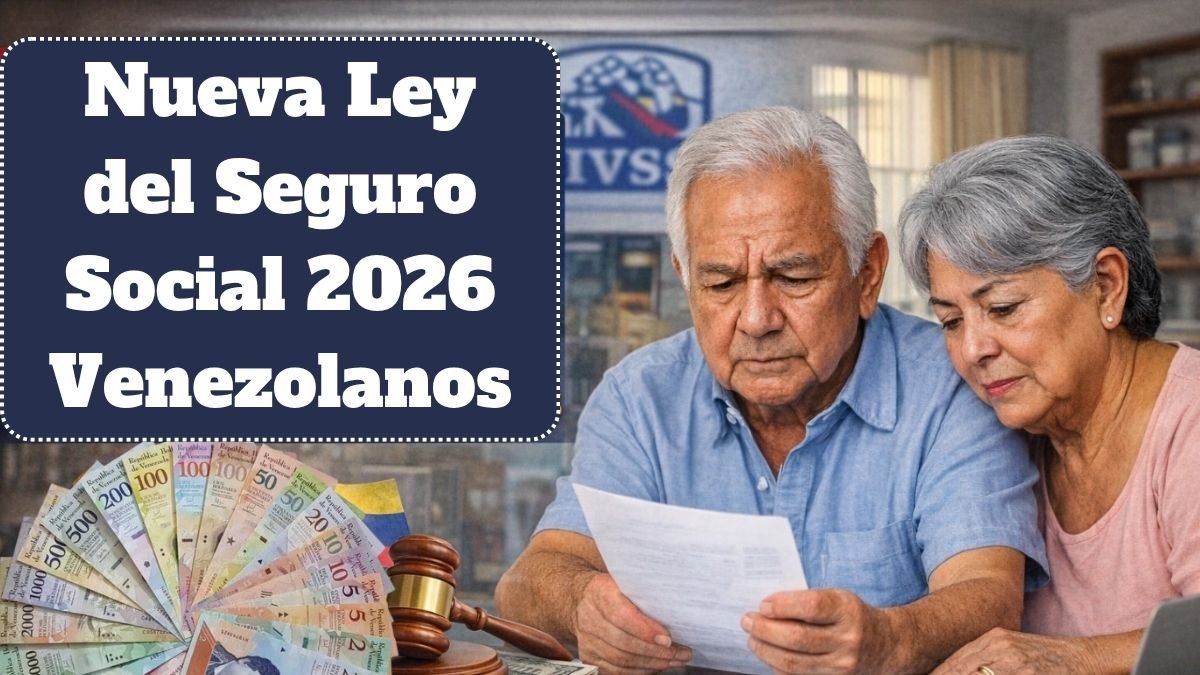
The year 2026 marks the advent of significant changes within Venezuela’s social security system, introduced under the banner of the “Nueva Ley del Seguro Social 2026” (New Social Security Law 2026). This new legislative framework holds particular importance for the millions of citizens who rely on retirement benefits or pensions. Through this reform, the government aims not only to strengthen the pension system but also to render it more inclusive, digitized, and sustainable. It is estimated that this new framework could directly or indirectly benefit approximately 5 million Venezuelans.
Objectives of the New Social Security Law
The primary objective of this new legislation is to modernize the social security system and expand its coverage to a larger segment of the population. For years, Venezuela’s pension and social security framework had grappled with numerous economic challenges—including inflation, low wages, and limited coverage. With these issues in mind, the government has implemented this new policy to ensure enhanced financial security for pensioners and to safeguard the long-term stability of the system.
Expanded Coverage and New Inclusions
One of the most significant changes introduced by the new law is the expansion of the social security system’s coverage to include a broader range of individuals. Previously, the benefits of this system were largely accessible only to those employed in the formal sector; now, however, efforts are underway to extend coverage to workers in the informal sector as well. This initiative will bring millions of individuals—who were previously excluded—within the scope of pension and healthcare benefits.
Potential Pension Increases and New Benefits
The new law also places a strong emphasis on improving pension amounts and establishing a mechanism for regular updates. Previously, pension amounts often remained static for extended periods, causing their real value to erode in the face of inflation. The government now plans to implement a system wherein pension amounts are periodically adjusted to ensure that beneficiaries retain their purchasing power.
According to various reports, 2026 may see the introduction of benefits such as percentage-based pension increases (potentially up to 25%) and additional bonuses, thereby contributing to an improvement in the income of the elderly population.
Digital Systems and Streamlined Processes
A key component of the new legislation is digitalization. Most pension-related operations—such as applications, verification, and payment processing—are now being moved online and automated. This will not only accelerate the process but also help mitigate issues related to corruption and delays.
Furthermore, the registration process has been simplified to ensure that a greater number of people can access the system without having to navigate complex procedures.
Changes to Retirement Regulations
The new law may also introduce changes to certain retirement-related regulations. For instance, adjustments could be made to the retirement age, contribution requirements, and the methodology for calculating benefits. The objective is to ensure the financial stability of the system, thereby guaranteeing the continued disbursement of pensions well into the future.
The Need for Reform Amidst Economic Challenges
Venezuela’s economy has long grappled with issues such as inflation and currency devaluation. Under these circumstances, making ends meet becomes a significant challenge for pensioners. According to various reports, pension amounts have remained stagnant at very low levels for several years, adversely affecting the financial well-being of the elderly population.
Consequently, this new legislation has emerged as a vital reform initiative, aiming to provide enhanced support to pensioners.
Impact on Beneficiaries
The most significant impact of this new law will be felt by those currently receiving pensions as well as those slated to retire in the future. Current pensioners may benefit from improved payment structures and additional entitlements, while new entrants to the workforce will gain access to a more secure and sustainable pension system.
Additionally, improvements in healthcare services and other social benefits are anticipated, which will serve to enhance the overall quality of life for the elderly.
Future Outlook
The Nueva Ley del Seguro Social 2026 (New Social Security Law of 2026) represents more than just an immediate reform; it is an integral part of a long-term strategic plan. The government’s objective is to further fortify the social security framework in the coming years, enabling it to adapt effectively to evolving economic landscapes.
If successfully implemented, this reform has the potential to ensure economic security not only for the current generation but for future generations as well.
Conclusion
The Nueva Ley del Seguro Social 2026 marks a significant shift in Venezuela’s social security framework. This legislation represents a major step toward better benefits for pensioners, expanded coverage, and a modernized system. While its success will depend on the effectiveness of its implementation, it is clear that this reform has the potential to bring about positive changes in the lives of millions of people.
Preguntas frecuentes
1. ¿La nueva ley del Seguro Social 2026 aumentará las pensiones?
Sí, se espera que incluya ajustes y mejoras que podrían incrementar los beneficios para millones de jubilados.
2. ¿Quiénes se beneficiarán con esta nueva ley?
Principalmente jubilados actuales, trabajadores próximos a retirarse y personas del sector informal que serán incorporadas.
3. ¿Cuándo entrarán en vigor los cambios de la ley?
Los cambios están previstos para implementarse a lo largo de 2026, dependiendo de la aprobación y ejecución del gobierno.