

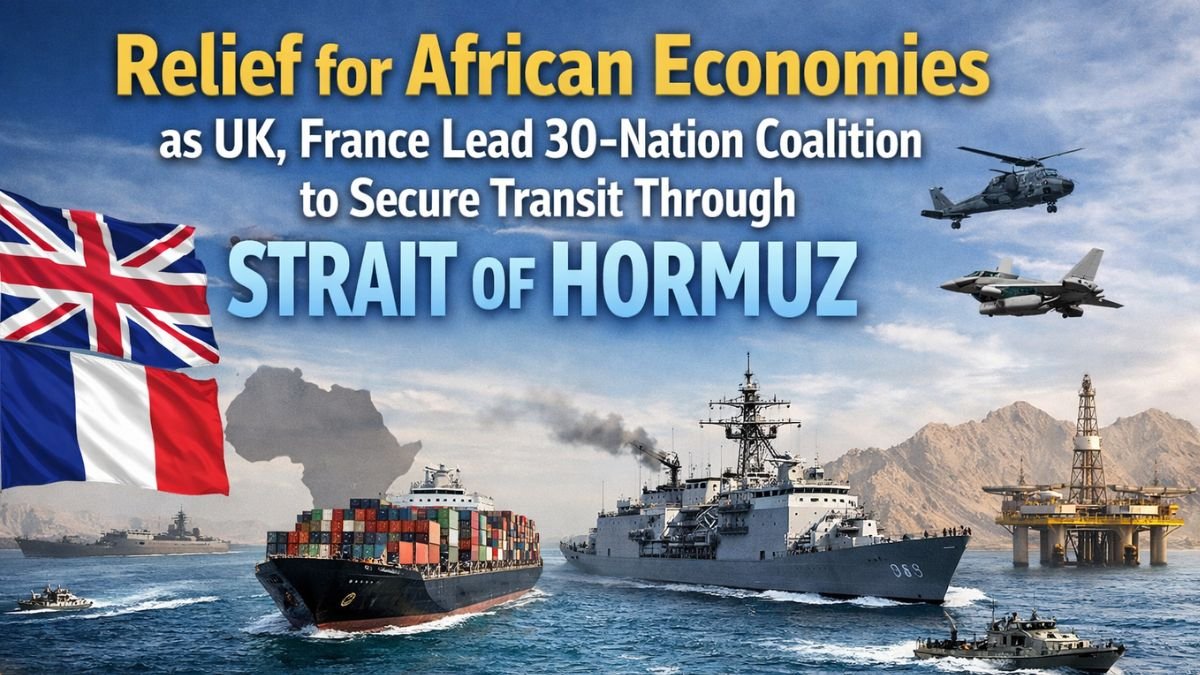
The global economy depends heavily on a few critical maritime routes, and among them, the Strait of Hormuz stands as one of the most vital. Recent geopolitical tensions in this narrow passage have raised alarms worldwide, particularly for African nations that rely heavily on imported fuel and global trade stability.
In a significant development, a coalition of 30 nations led by United Kingdom and France has stepped forward to ensure the safe and uninterrupted movement of vessels through this critical chokepoint. This move has brought a sense of relief to African economies, many of which were grappling with rising fuel costs, supply chain disruptions, and economic uncertainty.
Women who become classier as they get older usually display these 8 subtle behaviors
Why the Strait of Hormuz Matters to Africa
The Strait of Hormuz is not just a regional passage—it is a global artery for energy trade. Nearly a fifth of the world’s oil supply passes through this narrow stretch of water. For African nations, especially those that are net importers of petroleum products, any disruption here translates directly into economic strain.
Countries across East, West, and Southern Africa depend on oil shipments routed through the Middle East. When tensions escalate in the Strait of Hormuz, shipping costs surge, insurance premiums rise, and delays become inevitable. These disruptions trickle down to everyday life, increasing fuel prices, transportation costs, and ultimately the cost of living.
For developing economies already dealing with inflation and fiscal pressures, such shocks can be devastating. Therefore, securing this route is not just about global trade—it is about economic survival for many African nations.
Rising Tensions and Global Concerns
In recent months, geopolitical instability in the Persian Gulf region has heightened fears of potential blockades or attacks on commercial vessels. Incidents involving tanker seizures, drone strikes, and military posturing have underscored the vulnerability of this strategic waterway.
These tensions have had a ripple effect across global markets. Oil prices have fluctuated unpredictably, and shipping companies have begun rerouting vessels or charging higher fees to offset risks. For African economies with limited financial buffers, such volatility creates serious challenges in budgeting and planning.
The international community recognized that inaction could lead to a broader economic crisis, particularly for vulnerable regions like Africa. This realization set the stage for coordinated global intervention.
The 30-Nation Coalition: A Unified Response
The coalition led by the United Kingdom and France represents a rare moment of international unity. Comprising naval forces and logistical support from 30 countries, the initiative aims to maintain freedom of navigation and ensure the safety of commercial shipping in the Strait of Hormuz.
This coalition is not merely symbolic. It involves active naval patrols, intelligence sharing, and coordinated surveillance to deter potential threats. By maintaining a visible and capable presence in the region, the coalition seeks to reassure global markets and prevent escalation.
The leadership of the United Kingdom and France is particularly noteworthy. Both nations bring extensive naval experience and diplomatic influence, enabling them to coordinate efforts effectively among diverse participants.
Immediate Economic Relief for African Nations
The impact of this coalition has been swift and reassuring. Oil markets have shown signs of stabilization, and shipping companies have regained confidence in using the Strait of Hormuz route.
For African economies, this translates into tangible benefits. Fuel import costs are expected to stabilize, reducing pressure on national budgets. Transportation sectors, which are highly sensitive to fuel prices, can operate more predictably.
In countries where inflation has been driven by rising energy costs, this development offers a chance to regain control. Governments can focus on domestic economic reforms rather than firefighting external shocks.
Strengthening Trade and Supply Chains
Beyond oil, the Strait of Hormuz is a key route for a wide range of goods, including food, machinery, and consumer products. African nations rely on these imports to sustain industries and meet domestic demand.
The coalition’s efforts to secure the passage ensure that supply chains remain intact. This is particularly important in a global environment already strained by disruptions from pandemics and geopolitical conflicts.
Stable shipping routes mean fewer delays, lower costs, and improved availability of goods. For businesses across Africa, this creates a more predictable operating environment, encouraging investment and growth.
Strategic Implications for Global Security
The formation of this coalition highlights the growing recognition of interconnected global risks. What happens in a narrow strait in the Middle East can have far-reaching consequences for economies thousands of miles away.
By acting collectively, the participating nations have demonstrated a commitment to safeguarding global trade and stability. This approach may serve as a model for addressing other strategic vulnerabilities around the world.
For Africa, this also underscores the importance of international partnerships. While the continent continues to develop its own capacities, collaboration with global powers remains essential in navigating complex challenges.
Challenges and Limitations
Despite the positive developments, challenges remain. The presence of a coalition does not eliminate risks entirely. Tensions in the region could still escalate, and the potential for unforeseen incidents persists.
Moreover, maintaining such a large-scale operation requires significant resources and coordination. Sustaining the coalition over the long term will depend on continued political will and cooperation among member nations.
African countries must also recognize that reliance on external interventions is not a permanent solution. Building resilience through diversification of energy sources and trade routes is crucial for long-term stability.
Opportunities for African Economic Transformation
The current situation presents an opportunity for African nations to rethink their economic strategies. While the coalition provides immediate relief, it also highlights the vulnerabilities inherent in heavy dependence on external energy supplies.
Investing in renewable energy, regional trade networks, and local production can reduce exposure to global shocks. Initiatives such as the African Continental Free Trade Area (AfCFTA) offer pathways to strengthen intra-African trade and reduce reliance on distant markets.
By leveraging these opportunities, African economies can emerge stronger and more resilient, better equipped to handle future disruptions.
Conclusion: A Step Toward Stability
The decision by the United Kingdom, France, and their partners to lead a 30-nation coalition securing transit through the Strait of Hormuz marks a significant step toward global economic stability. For African economies, the impact is both immediate and profound, offering relief from mounting pressures and restoring confidence in critical supply chains.
However, this development also serves as a reminder of the interconnected nature of today’s world. Stability in one region is essential for prosperity in another. As African nations benefit from this intervention, the focus must also shift toward building long-term resilience and reducing vulnerability to external shocks.
In a world defined by uncertainty, coordinated action and forward-thinking strategies remain the keys to sustainable growth and stability.
FAQs
Q1. Why is the Strait of Hormuz important?
It is a key global oil transit route, handling a large portion of the world’s energy supply.
Q2. How does this coalition help African economies?
It ensures stable oil supply and trade routes, reducing economic pressure on African nations.
Q3. Which countries are leading the coalition?
The United Kingdom and France are leading the 30-nation alliance.