

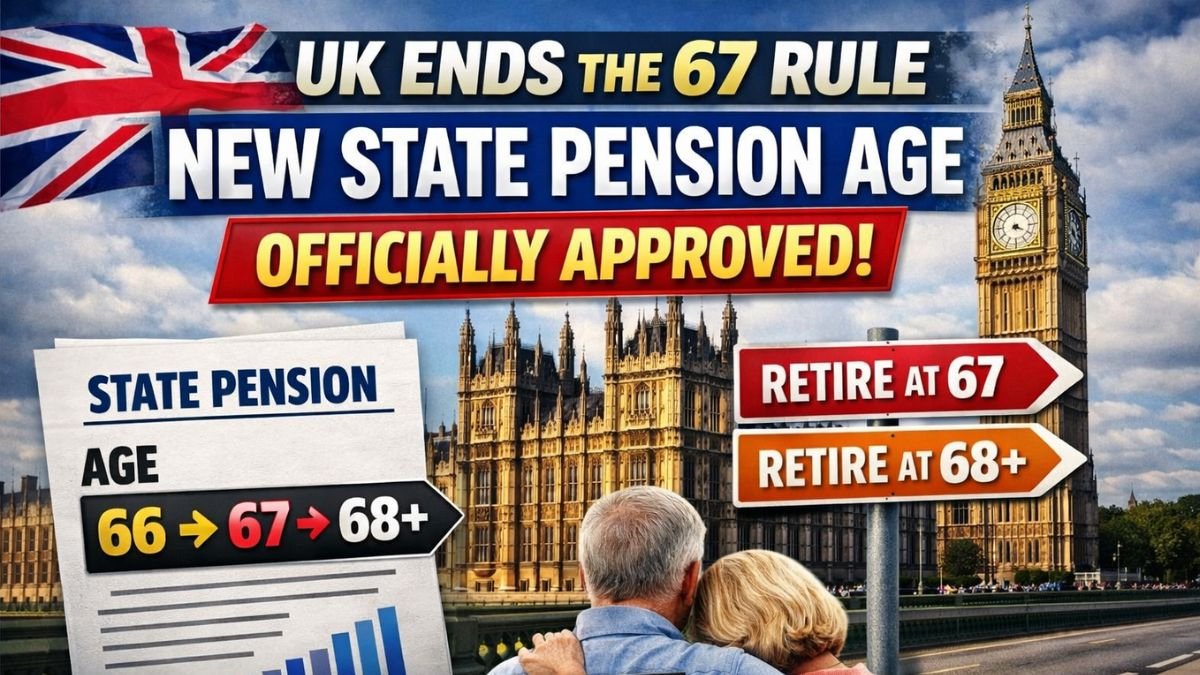
A major change regarding the State Pension in the United Kingdom (UK) is currently a subject of discussion, establishing a new direction concerning the “age 67” rule. For a long time, it has been assumed that one must wait until the age of 67 to receive the state pension; however, the government has now decided to amend this policy. This decision will impact the retirement planning and financial security of millions of people. Consequently, it is crucial to understand exactly what this change entails, why it has been implemented, and how it will affect the general public.
What is the state pension age?
The State Pension Age is the specific age at which an individual becomes eligible to receive a pension provided by the government. In the UK, this age has been raised periodically to strike a balance between rising life expectancy and economic pressures. Previously, this age was 65, which was gradually increased to 66 and subsequently to 67. Now, a new update has emerged regarding this “age 67 rule,” which is set to influence future pension policies.
What Changes Have Been Made to the “Age 67 Rule”?
According to recent decisions, the government has reviewed its previously established plans regarding the State Pension Age. This implies that the 67-year threshold has been subject to modification or reconsideration. According to some reports, the government may be planning to further increase the pension age in the future, while for certain segments of the population, consideration is being given to keeping it stable or implementing it differently. This decision is based entirely on the prevailing economic situation, the demographic age structure of the population, and societal needs.
Why Was This Change Necessary?
The average life expectancy of people in the UK is continuously rising, which, in turn, places increasing pressure on the pension system. Providing pension payments over a longer duration can become economically challenging for the government. Furthermore, it is essential to maintain a balance between the working-age population and the retired population. For these reasons, the government periodically adjusts the pension age to ensure the long-term sustainability of the system.
Who Will Be Most Affected?
This change will have the most significant impact on those individuals who are scheduled to retire in the coming years. People, particularly those aged between 40 and 60, may need to re-evaluate their retirement planning. If the pension age is raised, they may be required to work for a longer duration. Conversely, for some individuals, this change could also bring relief if the government introduces special provisions for specific groups.
Impact on Retirement Planning
This new rule will have a direct impact on people’s financial planning. While individuals previously structured their savings and investments with age 67 in mind, they must now adjust their strategies to align with the new age limit. Consequently, there may be an increased need to reduce reliance on state pensions and boost personal savings.
The Government’s Future Plans
The government aims to ensure that the state pension system remains stable and effective in the long term. To this end, periodic reviews are conducted, and adjustments are implemented as deemed necessary. Further updates regarding the pension age may emerge in the coming years; therefore, it is crucial for the public to keep a close watch on official announcements.
Advice for the General Public
Experts suggest that relying solely on the state pension is not a prudent approach. Individuals should also prioritize their personal savings, investments, and retirement planning. Furthermore, staying informed about new policies and regulatory changes is essential to enable timely and sound decision-making.
Conclusion
The update regarding the “UK Ends the 67 Rule” serves as a significant indicator that changes within the pension system are an ongoing process. While these changes are necessary to maintain economic equilibrium, they also signal the need for individuals to update their personal retirement plans. Therefore, it is imperative that we understand these changes and take appropriate measures to secure our future.
FAQs
Q1. What does ending the 67 rule mean for the UK State Pension?
A. It means the government has reviewed or changed the planned pension age of 67, possibly adjusting future retirement timelines.
Q2. Who will be affected by the new State Pension age changes?
A. People approaching retirement age and future retirees in the UK will be most affected.
Q3. Why is the State Pension age being changed?
A. The change is mainly due to rising life expectancy and the need to keep the pension system financially sustainable.